

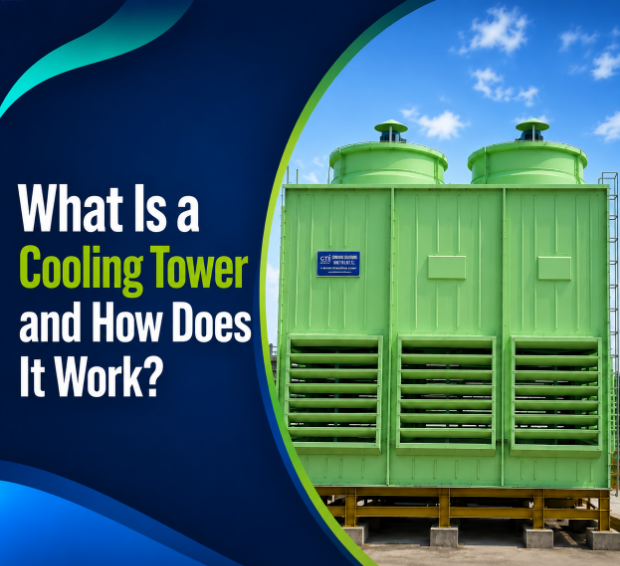
Industrial processes generate a large amount of heat that must be controlled to maintain efficiency and protect equipment. Without proper cooling, it can lead to breakdowns, higher energy use, and production loss. A cooling tower removes this excess heat from water through evaporative cooling and recirculates it back into the system, ensuring stable and efficient operations.
Cooling towers are widely used in industries like manufacturing, power plants, HVAC, pharmaceuticals, and chemicals due to their reliability and cost-effectiveness. SF Cooling Towers Pvt. Ltd. is a leading Cooling Tower Manufacturer in India, delivering efficient and durable cooling solutions for industrial needs.
Understanding the Purpose of a Cooling Tower
Before understanding how a cooling tower works, it's important to understand why industries need one in the first place. During production processes, machinery generates heat. This heat is often transferred to water circulating through condensers, heat exchangers, or industrial equipment. As the water absorbs heat, its temperature rises. If the heated water continues circulating without being cooled, the system's efficiency decreases and equipment may overheat.
A cooling tower solves this problem by removing excess heat from the water before it is sent back into the process. Think of a cooling tower as the "heat management center" of an industrial facility. It continuously removes unwanted thermal energy, ensuring that machines operate within safe temperature limits.
This process supports:
- Better equipment performance
- Reduced energy consumption
- Improved production efficiency
- Lower maintenance costs
- Longer equipment lifespan
- Sustainable water management
Because of these advantages, cooling towers have become a critical component of modern industrial cooling systems.
How Does a Cooling Tower Work?
The working principle of a cooling tower is surprisingly simple yet highly effective. The system uses evaporative cooling technology to remove heat from water. When a small portion of warm water evaporates, it carries heat away from the remaining water, reducing its temperature.
Here's how the process works step-by-step:
Step 1: Hot Water Enters the Cooling Tower
Industrial equipment, condensers, chillers, or manufacturing processes generate heat during operation. Water circulating through these systems absorbs the heat and becomes hot. This heated water is then pumped into the cooling tower through a distribution system.
Step 2: Water Is Distributed Over Fill Media
Inside the cooling tower, the hot water is spread evenly over specially designed fill media. The fill material increases the surface area of the water, allowing greater contact between water and air. This increased contact significantly improves heat transfer efficiency.
Step 3: Air Flows Through the Tower
At the same time, fresh ambient air is drawn through the tower by fans. In a mechanical draft cooling tower, high-efficiency fans create controlled airflow through the fill section. The moving air comes into direct contact with the warm water.
Step 4: Heat Is Removed Through Evaporation
As air passes through the fill section, a small percentage of the water evaporates. This evaporation process absorbs heat from the remaining water, causing the water temperature to drop significantly. This is the same natural cooling effect that occurs when sweat evaporates from the human body.
Step 5: Cooled Water Is Collected and Recirculated
After heat is removed, the cooled water collects in the basin located at the bottom of the tower. The water is then pumped back into the industrial process, condenser, or HVAC system, where it absorbs heat again and repeats the cycle.
This continuous circulation process allows industries to efficiently manage heat while conserving water and reducing energy costs.
Major Components of a Cooling Tower
The performance of a cooling tower depends on several key components working together. Each component plays a vital role in ensuring efficient heat transfer, reliable operation, and long-term performance.
Fill Media
Fill media is responsible for maximizing contact between water and air. It plays a crucial role in improving thermal performance and cooling efficiency by increasing the surface area available for heat transfer.
Fan Assembly
Fans create airflow through the tower and support the evaporative cooling process. High-efficiency fans help reduce power consumption while maintaining optimal cooling performance.
Water Distribution System
The distribution system ensures that water is evenly spread across the fill media, allowing uniform cooling throughout the tower and improving operational efficiency.
Drift Eliminators
Drift eliminators prevent water droplets from escaping with the airflow. This helps reduce water loss, protects surrounding equipment, and improves overall system efficiency.
Cold Water Basin
The basin collects cooled water before it is pumped back into the system for reuse. It serves as the reservoir that supports continuous circulation within the cooling process.
FRP Structure
Modern cooling towers are commonly manufactured using Fiberglass Reinforced Plastic (FRP). As an experienced FRP Cooling Tower Manufacturer in Faridabad, Superflow Cooling Towers recommends FRP construction because of its excellent corrosion resistance, lightweight design, durability, and long service life.
Unlike traditional metal structures, FRP cooling towers perform exceptionally well in harsh industrial environments and require minimal maintenance, making them a cost-effective solution for long-term industrial use.
Types of Cooling Towers
Different industries require different cooling solutions. The most common cooling tower types are designed to meet varying operational requirements, cooling capacities, and installation conditions.
Crossflow Cooling Towers
In a crossflow cooling tower, air moves horizontally across the downward flow of water. This design provides efficient cooling while offering easy accessibility for maintenance and inspection.
- Easy maintenance
- Lower pumping requirements
- Reliable performance
- Simplified water distribution
Counterflow Cooling Towers
In counterflow cooling towers, air travels upward while water flows downward. This opposite-flow design maximizes heat transfer efficiency and delivers superior cooling performance.
- Higher thermal efficiency
- Compact design
- Better cooling performance
- Reduced footprint
Mechanical Draft Cooling Towers
Mechanical draft cooling towers use high-performance fans to generate airflow through the tower. These systems are widely used in industrial and commercial applications because of their efficiency and controlled cooling capabilities.
Natural Draft Cooling Towers
Natural draft cooling towers rely on natural air circulation rather than mechanical fans. These large structures are commonly found in power generation facilities and other large-scale industrial operations.
Why Cooling Towers Are Essential for Modern Industries
Industries today face increasing pressure to improve operational efficiency, reduce energy costs, and maintain sustainable production practices. A properly designed cooling tower plays a critical role in achieving these objectives.
Cooling towers help industries by:
- Improving process cooling efficiency
- Reducing equipment overheating
- Lowering energy consumption
- Supporting continuous production
- Extending machinery lifespan
- Reducing maintenance requirements
- Conserving water through recirculation
For facilities seeking long-term operational savings, investing in an efficient cooling tower is one of the smartest decisions to improve productivity while controlling operating costs.
Industries That Use Cooling Towers
Cooling towers are used across a wide range of industries where continuous heat generation occurs during production and manufacturing processes.
Common applications include:
- Power generation plants
- Steel and metal industries
- Chemical processing plants
- Pharmaceutical manufacturing units
- Textile industries
- Food and beverage industries
- Commercial HVAC systems
- Plastic and rubber manufacturing
As a reliable Cooling Tower Manufacturer in Faridabad, Superflow Cooling Towers Pvt. Ltd. supplies advanced cooling solutions designed to handle diverse industrial requirements with high efficiency, durability, and long-term performance.
Why CTI Certification Matters
When investing in industrial cooling systems, performance reliability is extremely important. This is where CTI certification becomes a key factor in selecting the right cooling tower manufacturer.
A CTI Certified Cooling Tower Manufacturer ensures that the cooling tower has been tested and validated for thermal performance according to internationally recognized standards established by the Cooling Technology Institute (CTI).
CTI certification provides confidence that the cooling tower will deliver the expected performance under real operating conditions while maintaining efficiency and reliability over the long term.
Benefits of CTI Certification
- Verified cooling performance
- Improved operational trust and reliability
- Better energy efficiency
- Reduced risk of underperformance
- Higher return on investment (ROI)
For industries operating on a large scale, CTI certification provides peace of mind by ensuring consistent cooling performance, reduced operational risks, and long-term cost savings.
Why Choose Superflow Cooling Towers Pvt. Ltd.?
Choosing the right manufacturer is just as important as selecting the right cooling tower design. Superflow Cooling Towers Pvt. Ltd. (CTI-Certified) is a trusted name in industrial cooling solutions, known for delivering high-performance, energy-efficient, and durable cooling systems for diverse industries.
With years of industry experience and a commitment to engineering excellence, we provide customized cooling tower solutions that meet the unique requirements of each client while ensuring long-term reliability and operational efficiency.
What Makes Us Different?
- Strong engineering expertise
- Custom-designed cooling solutions
- High-quality FRP construction
- Focus on energy efficiency
- Reliable after-sales support
- Industry-tested performance standards
We design cooling towers that are not only highly efficient but also built for long-term industrial use. Our systems are engineered to deliver maximum cooling performance while minimizing maintenance requirements and operating costs.
Conclusion
Cooling towers are a vital part of modern industrial infrastructure. They help industries manage heat efficiently, reduce energy consumption, and maintain smooth production processes. From power plants and manufacturing units to HVAC systems and chemical industries, cooling towers ensure that equipment operates within safe and efficient temperature ranges, improving productivity and extending equipment lifespan.
Investing in a high-quality cooling tower can significantly improve operational efficiency, reduce maintenance costs, and support sustainable industrial operations. Selecting the right cooling tower manufacturer is equally important to ensure long-term performance and reliability.
For expert consultation, installation assistance, or customized cooling system design, contact Superflow Cooling Towers Pvt. Ltd. at +91 98103 37622 or visit www.sfcoolingtower.com to explore our complete range of efficient and reliable cooling tower solutions designed to enhance your operational performance.
// Our Faq
Faq
A cooling tower is an industrial heat rejection system that removes excess heat from water and cools it down using air and evaporation.
It works by circulating hot water, spreading it over fill media, allowing air to pass through, and cooling the water through evaporation before recirculation.
The main purpose is to reduce heat from industrial processes and maintain safe and efficient operating temperatures.
Cooling towers are used in power plants, manufacturing industries, HVAC systems, chemical plants, and food processing units.
FRP (Fiberglass Reinforced Plastic) is a corrosion-resistant material used to build durable and low-maintenance cooling towers.
The main types include crossflow, counterflow, mechanical draft, and natural draft cooling towers.
It improves energy efficiency, prevents equipment overheating, reduces operating costs, and supports continuous production.
A cooling tower uses evaporation to remove heat, while a chiller uses refrigeration to cool water to precise temperatures.
Cooling towers should be inspected monthly and undergo full maintenance periodically depending on usage and water quality.
CTI certification ensures that a cooling tower meets international performance and efficiency standards set by the Cooling Technology Institute.